Rosa Vogel · 25 September 2026
Navigating Content Distribution Challenges for Solo Digital Creators in a Platform-Dominated Landscape
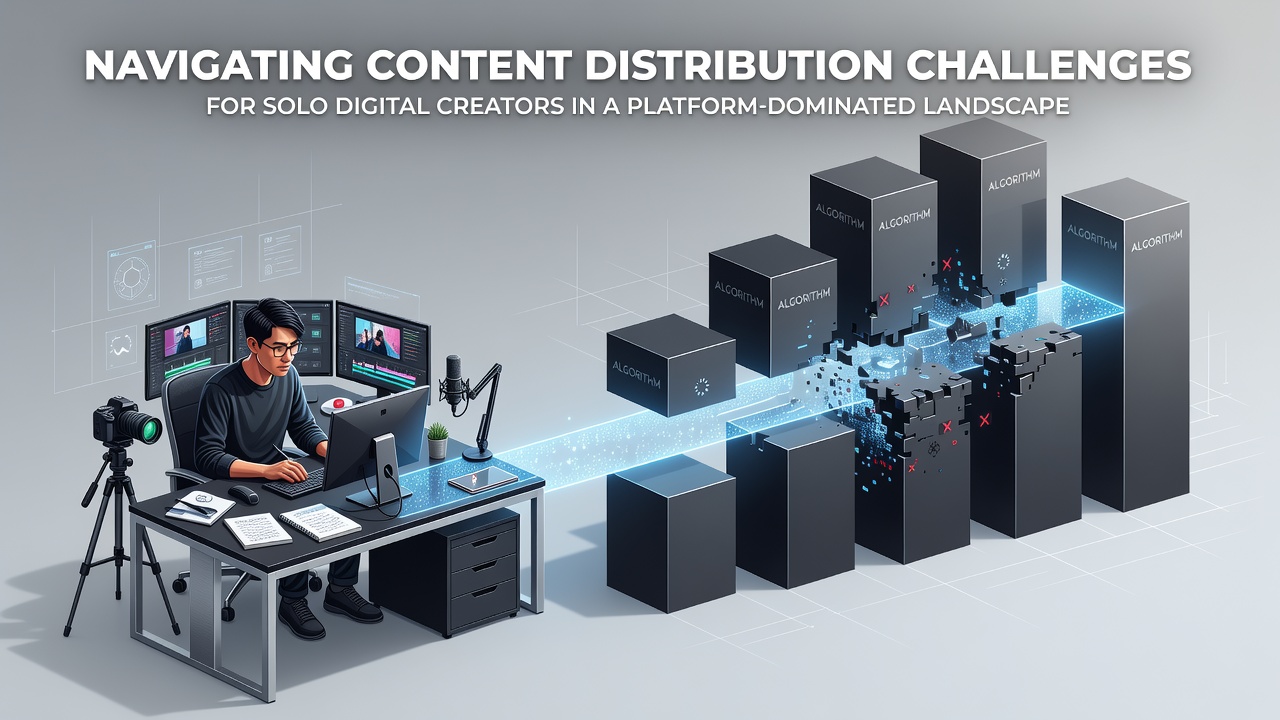
Digital creators operating independently face distribution hurdles shaped by the concentration of audience attention on major platforms, where reach depends on opaque recommendation systems and shifting policies that affect visibility for those without large teams or budgets. Data from industry reports indicates that solo creators often allocate significant portions of their time to adapting content formats for each platform's requirements, while metrics show declining organic reach across social networks since the mid-2010s. In September 2026, platform updates continued to emphasize paid promotion, leaving independent voices to compete in environments where algorithmic prioritization favors established accounts and paid placements.
Dependency on Centralized Platforms
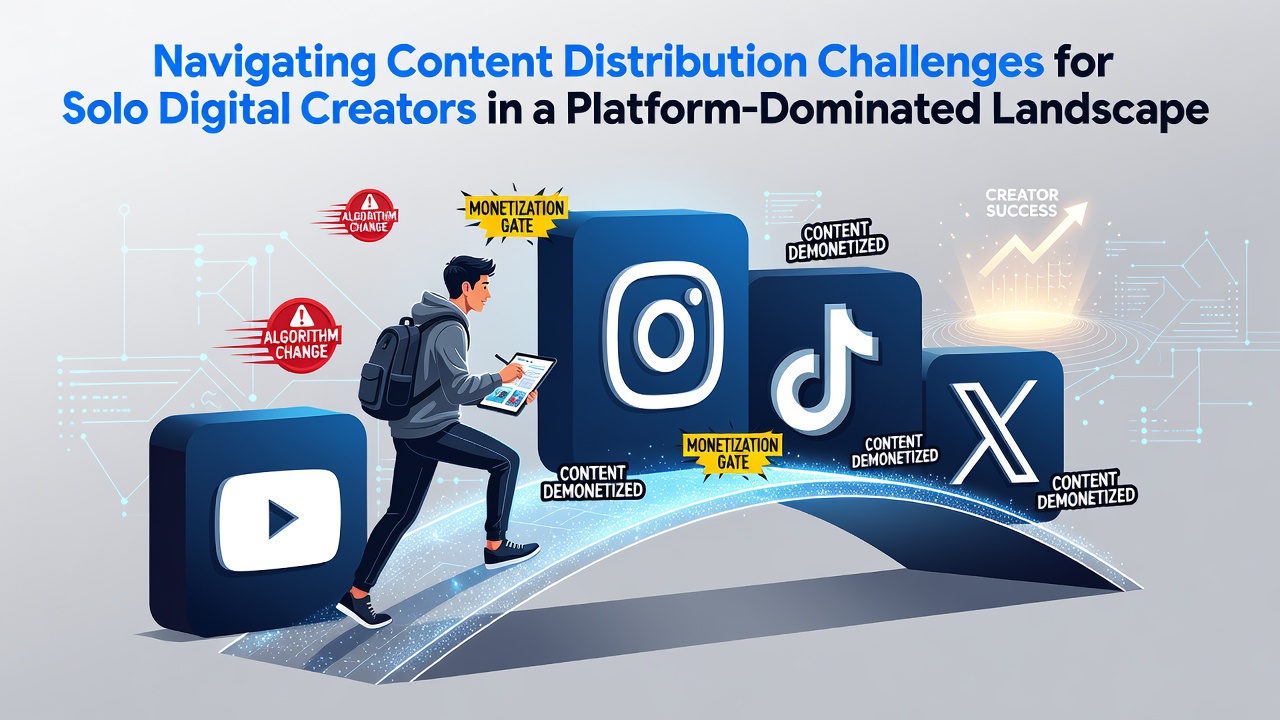
Many solo creators begin distribution through services such as video sharing sites, image networks, and short-form video apps because these channels provide initial access to large user bases without upfront infrastructure costs, yet this approach creates reliance on external policies that can change without notice. Researchers at academic institutions have documented cases where account suspensions or content demotions occurred due to automated flags, and those incidents reduced traffic for creators who had built audiences exclusively on one service. Observers note that diversification attempts often encounter barriers when cross-posting tools face restrictions or when platform terms limit external links in descriptions and bios.
Algorithm Changes and Reach Volatility
Recommendation engines determine the majority of content exposure on dominant platforms, and studies tracking distribution patterns reveal frequent adjustments that alter what appears in user feeds. Figures from research organizations show that solo creators experienced average reach drops of 30 to 50 percent following major algorithm revisions in recent years, prompting shifts toward paid boosts or format experiments to maintain previous levels. Those who've studied platform data note that engagement signals such as watch time and shares receive heavier weighting than follower counts alone, which forces adjustments in posting schedules and content length that may not align with every creator's production capacity.
Monetization and Revenue Distribution Pressures
Revenue models tied to platform advertising pools introduce additional variables, where payout rates fluctuate based on advertiser demand and content categorization, and solo creators must navigate eligibility thresholds that include minimum view counts or subscriber numbers. Reports from regulatory bodies in multiple regions highlight how payment processing delays and fee structures reduce net earnings, while data from creator surveys indicate that many supplement platform income with direct sales or memberships hosted elsewhere. In practice, those who maintain presence across several services find that audience fragmentation requires duplicated effort in promotion, and tracking performance across dashboards consumes time that could otherwise go toward new material.
Regulatory and Policy Influences
Government frameworks such as the European Union's Digital Services Act and oversight from bodies like the Australian Competition and Consumer Commission have introduced transparency requirements for recommendation systems, requiring platforms to disclose certain ranking criteria that affect creator visibility. Data released by these agencies shows increased reporting on content moderation decisions, yet implementation timelines vary and solo creators must monitor updates across jurisdictions when their audiences span multiple countries. Industry analyses reveal that compliance costs for platforms sometimes lead to stricter content guidelines, which in turn influence what types of material receive distribution priority in affected regions.
Alternative Channels and Infrastructure Options
Some creators explore email lists, personal websites, and decentralized protocols to reduce reliance on single platforms, and adoption metrics indicate steady growth in newsletter platforms that allow direct audience contact. Research from organizations tracking digital publishing trends demonstrates that hybrid approaches combining owned channels with selective platform use can stabilize distribution, although initial setup requires technical familiarity or external assistance. Observers point to examples where creators integrated RSS feeds or community forums hosted on independent servers, and those methods provided consistent access to subscribers even when platform algorithms changed. Figures from academic studies further show that direct channels often yield higher conversion rates for products or services compared with platform-native monetization tools.
Conclusion
Distribution for solo digital creators remains intertwined with platform mechanics, regulatory developments, and infrastructure choices that continue to evolve through 2026 and beyond, with available data underscoring the value of monitoring multiple signals and maintaining presence across varied channels. Those tracking these patterns find that consistent measurement of reach, revenue, and audience retention across services supports informed adjustments, while external reports from government agencies and research institutions supply context on broader trends affecting independent operators.